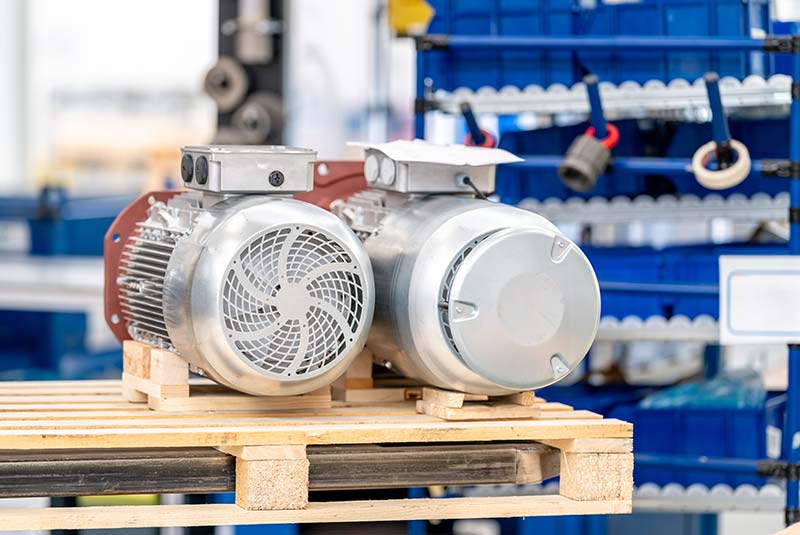
Explosion-proof motors are designed for use in flammable and explosive environments, such as petroleum facilities, chemical plants, petrochemical plants and other hazardous industrial locations.
Because these workplaces present a high risk of explosion, explosion-proof motors must be designed and manufactured to meet the relevant safety requirements of their intended operating environments.
Overview
Types of Explosion-Proof Motors
(1) By explosion-protection rating
Explosion-proof motors can be classified into DIP20, DIP21 and Ex d IIB T6 types according to their protection structures and applicable hazardous environments.
(2) By drive type
They can be divided into two main categories:
Brushless DC motors;
AC variable-frequency motors.
(3) By application
They can be divided into:
General industrial motors;
Special-purpose three-phase asynchronous motors for explosion-proof cranes and lifting equipment.
Main Characteristics
(1) The enclosure is made of steel and treated with anti-corrosion paint or impregnated epoxy resin coating;
(2) The motor enclosure is manufactured through integral casting or die-casting, while the rotor is generally heat-treated and quenched to improve its impact resistance and mechanical strength;
(3) The stator winding adopts a concentric multi-pole structure and is equipped with short-circuit protection and overcurrent protection devices;
(4) The motor is provided with bidirectional terminal connections and reliable cable-locking functions;
(5) It uses energy-efficient control circuits and control components featuring low operating noise and a high power factor.
Operating Principle
The rotor of an explosion-proof motor is an electromagnetic component that rotates within a rotating magnetic field while being enclosed inside a metal housing. This form of magnetic-field movement is known as a rotating magnetic field.
The explosion-proof enclosure is designed to contain any ignition or explosion that may occur inside the motor. If flammable gases enter the enclosure and are ignited by high temperatures, sparks or electrical arcs, the enclosure can withstand the resulting explosion pressure without being damaged.
At the same time, the precisely designed flameproof joints and gaps cool the high-temperature gases and extinguish the flame before they can escape from the enclosure. This prevents flames, sparks and hot gases from igniting the explosive atmosphere outside the motor. This operating principle is known as flameproof protection.