Table of Contents
An inverter duty motor that is too small can overheat or fail to accelerate the machine. An inverter duty motor selected with an unexplained margin can create unnecessary purchase cost and operate far from its intended duty. The useful starting point is the driven machine’s demand, including the worst credible operating condition.
For YVP variable-frequency motors, the decision centers on required shaft output and overload margin. This guide connects that question to adjustable-speed industrial drive systems and the information an equipment buyer needs before approving an inverter duty motor. The result should be a duty-point schedule and a supplier-confirmed torque margin, with the installation conditions visible to both the machine builder and the supplier.
The inverter duty motor decision for this project
The first risk is selecting output from the old nameplate without establishing the driven load. In a project involving process machinery requiring a controlled operating speed range, that risk needs to be checked against the actual equipment duty. A product family is a useful way to shortlist an option, but the selected inverter duty motor still needs an agreed operating requirement.
An adjustable-speed inverter duty motor has to deliver the required torque at each operating speed while remaining within electrical, thermal and mechanical limits. Base speed, constant-torque operation and the region above base speed need separate consideration. Extending frequency does not extend rated torque indefinitely.
Sizing for the Real Load: the engineering method
Build a load schedule before choosing a frame. List the shaft speed, continuous torque, short-duration peak and time spent at each condition. Distinguish a process requirement from an allowance added by a previous designer. If the old inverter duty motor repeatedly operated below its rating, that fact alone does not prove the new motor can be smaller. Starting torque, inertia, ambient temperature and protective coordination still need review.
For a rotating load, mechanical power relates to torque and speed. Use P(kW) = T(N·m) × n(r/min) / 9550 as an engineering estimate with consistent units. This relationship calculates shaft output, not electrical input. It also does not establish how much torque the inverter duty motor can produce during starting or above its base speed. Compare the calculated duty with the inverter duty motor supplier’s continuous and transient limits.
What to confirm about YVP variable-frequency motors
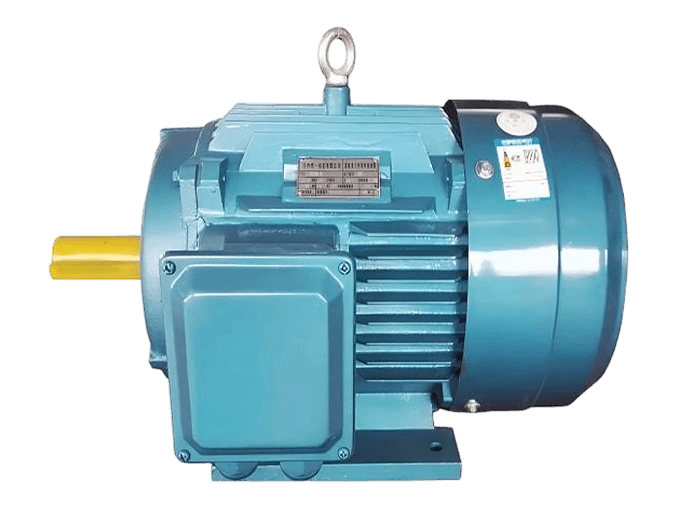
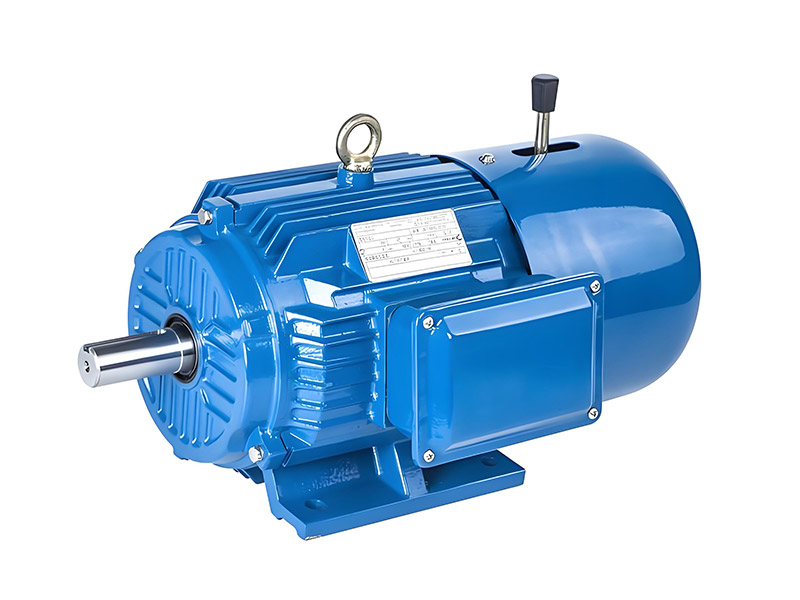
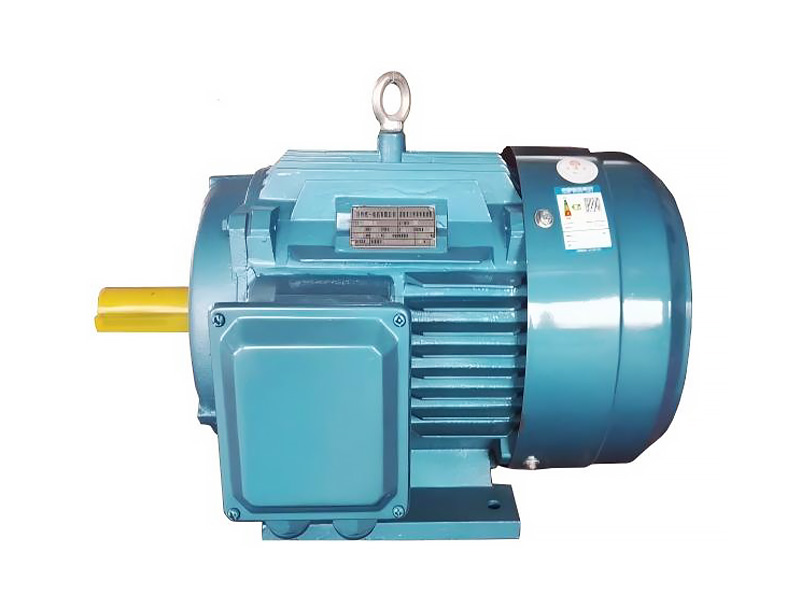
Tongyi’s YVP page describes a cage inverter duty motor with a separate cooling fan. The published table distinguishes constant-torque and constant-power frequency ranges. These ranges are useful selection prompts, but the allowed operating envelope must be confirmed for the selected model and load.
One YVP table entry combines a six-pole model label with values that warrant technical confirmation. Avoid copying that row into a project specification without review. Obtain a corrected model-specific datasheet, inverter duty motor speed, rated torque and permissible frequency range.
The maximum mechanical speed is a separate limit from the inverter’s maximum output frequency. Review rotor speed, bearings, balance, coupling inverter duty motor rating and the driven equipment’s permissible speed. A centrifugal machine can also demand rapidly increasing power as speed rises.
Review Tongyi’s YVP variable-frequency motors information alongside the project requirement. For non-standard interfaces or operating conditions, use the engineering and customization service to resolve the offered configuration.
A worked screening example and its limits
Consider an illustrative machine requiring 30 N·m at 1450 r/min. The calculated shaft output is about 4.56 kW. The next inverter duty motor selection step is not simply to round the result upward. Add the actual acceleration requirement, transmission losses where the torque was measured upstream, operating cycle and local thermal conditions. The example is a calculation method, not a Tongyi model recommendation.
For YVP variable-frequency motors, supplement this screening example with separate fan supply and failure response and converter model and inverter duty motor cable length. Compare the result with the confirmed operating envelope before choosing the final inverter duty motor configuration.
Compare the available approaches
| Decision | Defined selection | Alternative to evaluate | Evidence needed |
|---|---|---|---|
| Drive approach | YVP motor and matched converter | fixed-speed motor with process throttling | torque at minimum speed and total system operating cost |
| Project objective | a duty-point schedule and a supplier-confirmed torque margin | A quotation based on incomplete operating assumptions | shaft torque, speed and duration |
| Electrical and controls | Supplier-confirmed motor and control data | Unconfirmed combination chosen by nominal power | torque at each speed and transient overload; converter model and motor cable length |
| Installation | Approved motor and mating-equipment drawings | Assumed fit from a similar frame | Interface dimensions, tolerances and service access |
| Release condition | Close documented deviations | Leave unresolved items visible | Accepted requirements tied to a model and revision |
Resolve this comparison using torque at minimum speed and total system operating cost, with shaft torque, speed and duration recorded under the same useful operating duty.
Build the model-specific technical schedule
Request a torque-speed envelope, cooling arrangement, thermal protection details and compatible drive recommendations. Record continuous and short-duration limits separately. The commissioning file should include the confirmed motor data and the final drive parameters used for the accepted machine.
1. Minimum and maximum continuous speeds.
2. Torque at each speed and transient overload.
3. Separate fan supply and failure response.
4. Converter model and inverter duty motor cable length.
5. Driven-equipment overspeed limit.
Commissioning and acceptance sequence
Ask the equipment designer to identify the source of each torque and speed value. Where measurements are possible, record normal and worst-duty data over a representative production cycle. Keep startup, steady running and abnormal process events separate. Agree the acceptable overload duration and recovery time with the inverter duty motor supplier.
During acceptance, demonstrate useful machine output at the agreed load points and check that current, temperature and speed remain within the approved limits. Keep a record of the instruments and process condition. An unloaded test can establish rotation and basic function, but it cannot validate full-load sizing.
Resolve the remaining application questions
A useful load record identifies the measurement boundary. Torque measured at the process shaft must be translated through the gearbox or belt drive before it becomes a motor-shaft requirement. State whether the reported value includes transmission losses. Keep the efficiency assumption explicit instead of adding several unexplained margins at different stages.
For a variable process, list the lowest, normal and highest useful output rather than selecting only a maximum. The largest output may occur rarely, while continuous thermal loading is governed by another state. Ask which short-duration demand the inverter duty motor can tolerate and how long it needs to recover. A peak inverter duty motor rating without a duration is incomplete.
The engineering release should show the source of the load data, the selected inverter duty motor rating and the unresolved uncertainty. If the machine has never been built, the prototype plan should test the assumption that most affects sizing. If it is an existing machine, collect a representative production record before assuming that the old inverter duty motor’s rating describes the real demand.
Troubleshooting and changes after approval
Repeated trips during acceleration can result from a short ramp, an overloaded process, inappropriate torque limits or incorrect motor data. Compare measured current and speed with the load requirement. Increasing the drive size alone does not correct a mechanical jam or an unsuitable inverter duty motor duty.
Do not present a table frequency range as a universal continuous-duty approval. The selected model, cooling, load and converter conditions define the real limit.
Prepare the final inquiry and evidence file
Send Tongyi the equipment description, the required shaft output and overload margin requirement and the five technical items above. The required outcome is a duty-point schedule and a supplier-confirmed torque margin. Keep the engineering scope as a coordinated inverter duty motor, converter and driven-machine selection.
For broader technical context, consult U.S. Department of Energy motor and drive systems sourcebook. Use the applicable project requirements and model-specific supplier documents to make the final selection.
Ready to discuss the inverter duty motor requirement? Share your load, supply, installation drawing and the required shaft output and overload margin target with Xuzhou Tongyi Motor. Ask for a model-specific technical review and quotation that addresses the open items in your inverter duty motor specification.
Frequently asked questions
What information is needed for this inverter duty motor selection?
Provide the equipment duty and the required shaft output and overload margin, together with minimum and maximum continuous speeds and separate fan supply and failure response. Ask the supplier to confirm a specific configuration.
What should be checked first for YVP variable-frequency motors?
Can the motor deliver continuous torque at minimum speed? Resolve this against the actual load and installation. The answer should be traceable to the offered rating or drawing.
Can a standard inverter duty motor be substituted directly?
Only after the rating, interface, controls and operating conditions have been checked. For this project, torque at minimum speed and total system operating cost is central to the comparison.
What evidence supports sizing for the real load?
Obtain a duty-point schedule and a supplier-confirmed torque margin. Record shaft torque, speed and duration under the agreed duty, and identify any requirement that still needs site verification.
How can Tongyi review the requirement?
Send the duty schedule and current interface information through the inquiry form. What occurs if the independent cooling fan fails? Request a clear technical response before releasing the order.